Found a soft spot on your lānai? The first question isn’t what to buy at the hardware store. It’s whether the damage stops at one board or goes deeper.
First, identify the cause
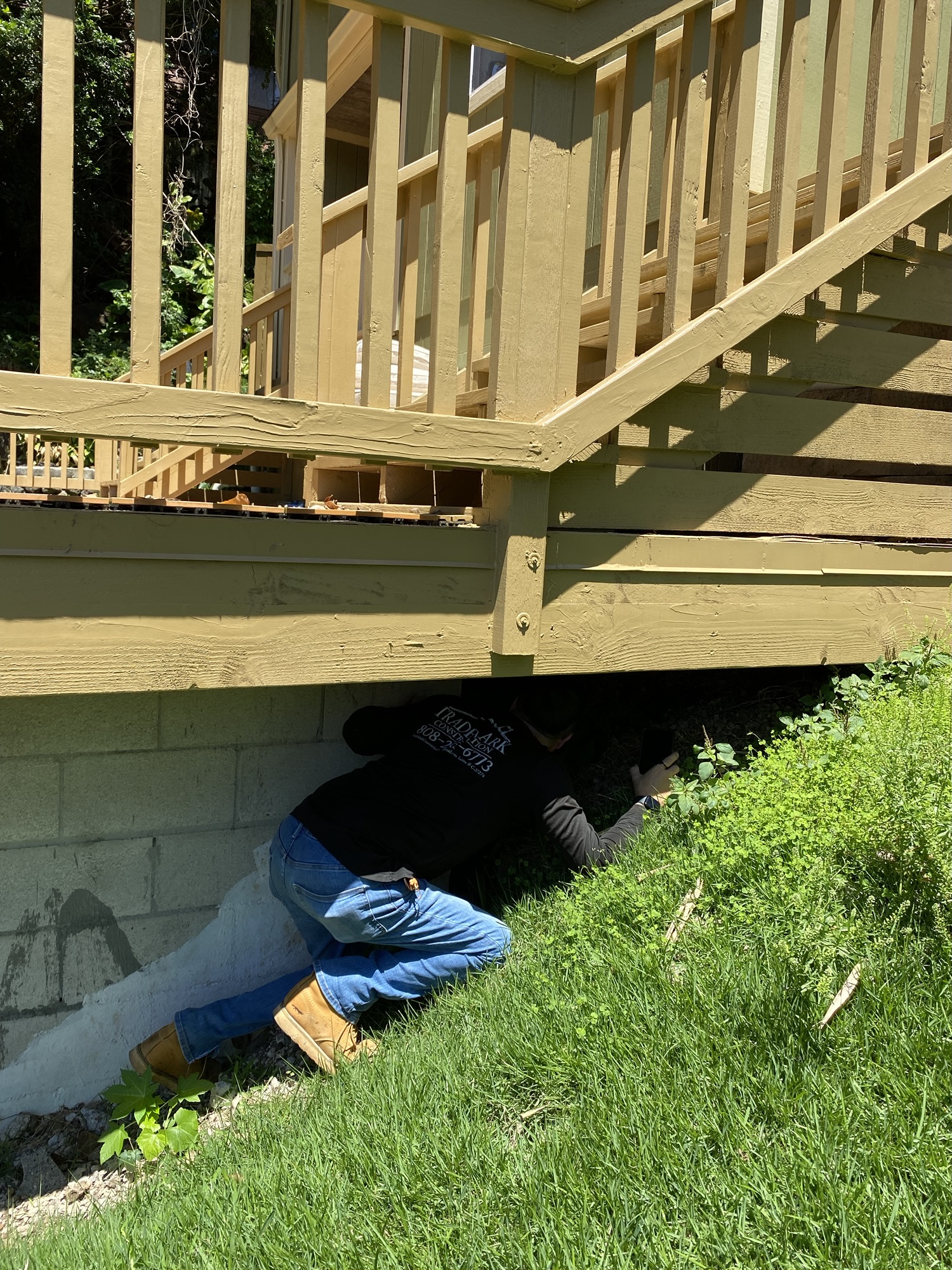
Replacing wood without correcting the source can hide the problem temporarily. Look for roof or plumbing leaks, failed sealant, poor drainage, trapped moisture, pest activity, or repeated exposure to wind-driven rain.
Repair may make sense when
- The damaged area is small and clearly isolated
- The remaining wood is sound and dry
- The component is not carrying a critical structural load
- A durable repair can be shaped, fastened, sealed, and finished properly
- Repair preserves material that would be difficult to match
Replacement may be the better choice when
- Decay extends beyond the visible area
- The wood is soft, crumbling, split, or unable to hold fasteners
- The component affects safety or structural performance
- Pest damage is active or widespread
- Repeated repairs have already failed
- Access is open now and replacement prevents more expensive work later
Expect the scope to change after opening
Some conditions cannot be fully evaluated until trim, siding, flooring, or another finish is removed. A good written scope explains how concealed damage will be documented and priced before additional work proceeds.
Suspected structural damage, significant decay, or active pest conditions may require evaluation by the appropriate licensed professional.
What replacement looked like on a Pali lānai
On this Pali project, the damage wasn’t limited to a single board. The deck boards and wood railings had deteriorated, so we replaced both. See the Pali lānai rebuild for more photos.

Not sure what needs replacing?
Send us a few photos taken from a safe spot: one showing the whole area and one showing the damage. Photos help us understand where to start, but they don’t replace an on-site assessment.

